Suggested Edit for Satellite
Suggested by bv2dqbv2dq on: 2026-02-25 18:40
Citation: https://iaru.amsat-uk.org/finished_detail.php?serialnum=1085
Verdict: Approved
Reviewed by fredy on: 2026-02-25 18:43
| Name | Lilium-4 |
| NORAD ID | 98391 |
| Followed NORAD ID | - |
| Alternative Names | BN0YCA |
| Description | A 6U CubeSat with APRS Digipeater for global amateur intercommunication. Also active on UHF 437.850MHz while telemetry data inactive. Optical Visibility Investigation: A student-led study of space-to-ground optical signal acquisition using an onboard modulated beacon. S-Band Telemetry: High-bandwidth downlink at 2405.0 MHz for students to monitor optical payload performance and learn S-band link management. GNSS Reference: Uses the L1 1575.42 MHz signal to provide positioning and clock synchronization for all amateur radio payloads. Public Participation: Encourages the amateur community to decode unencrypted telemetry and participate in link-budget validation. 1. VHF Digipeater for APRS 145.825MHz, 1200bps AX.25. Call sign BN0YCA, or ARISS also available to response. 2. UHF Telemetry 437.850MHz, 1k2 AFSK with AX25 3. S Band telemetry backup downlink using 100kbps on initially, or up to 2Mbps data rate GFSK based on ground control. Planning a SpaceX launch from Vandenberg NET mid March 2026 into a 510 km SSO, so far moved to 29th Mar 2026. |
| Owner/Operator | - |
| Status |

|
| Reception Status | Unknown |
| Reception Evidence | - |
| Countries of Origin | |
| Website | - |
| Dashboard URL | - |
| Launch Date | March 29, 2026, midnight |
| Deploy Date | - |
| Image | 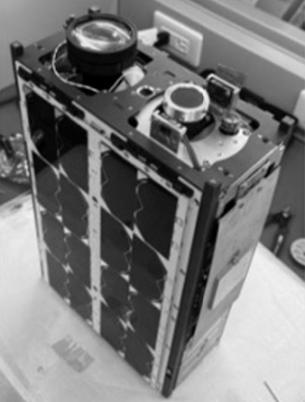 |
| Field | Previous | Suggested |
|---|---|---|
| Alternative Names | - | BN0YCA |
| Description | A 6U CubeSat with APRS Digipeater for global amateur intercommunication. Also active on UHF 437.850MHz while telemetry data inactive. Optical Visibility Investigation: A student-led study of space-to-ground optical signal acquisition using an onboard modulated beacon. S-Band Telemetry: High-bandwidth downlink at 2405.0 MHz for students to monitor optical payload performance and learn S-band link management. GNSS Reference: Uses the L1 1575.42 MHz signal to provide positioning and clock synchronization for all amateur radio payloads. Public Participation: Encourages the amateur community to decode unencrypted telemetry and participate in link-budget validation. Proposing a VHF downlink for APRS, a UHF downlink for telemetry using 1k2 AFSK with AX25 and an S Band downlink using 2 Mbps GFSK. Planning a SpaceX launch from Vandenberg NET mid March 2026 into a 510 km SSO. | A 6U CubeSat with APRS Digipeater for global amateur intercommunication. Also active on UHF 437.850MHz while telemetry data inactive. Optical Visibility Investigation: A student-led study of space-to-ground optical signal acquisition using an onboard modulated beacon. S-Band Telemetry: High-bandwidth downlink at 2405.0 MHz for students to monitor optical payload performance and learn S-band link management. GNSS Reference: Uses the L1 1575.42 MHz signal to provide positioning and clock synchronization for all amateur radio payloads. Public Participation: Encourages the amateur community to decode unencrypted telemetry and participate in link-budget validation. 1. VHF Digipeater for APRS 145.825MHz, 1200bps AX.25. Call sign BN0YCA, or ARISS also available to response. 2. UHF Telemetry 437.850MHz, 1k2 AFSK with AX25 3. S Band telemetry backup downlink using 100kbps on initially, or up to 2Mbps data rate GFSK based on ground control. Planning a SpaceX launch from Vandenberg NET mid March 2026 into a 510 km SSO, so far moved to 29th Mar 2026. |
| Launch Date | - | March 29, 2026, midnight |