Suggested Edit for Satellite
Suggested by bali on: 2026-04-10 07:49
Citation: https://connectivity.esa.int/archives/news/greeces-advanced-laser-satellite-communications-test-campaign-to-launch-with-esa-support
Verdict: Approved
Reviewed by fredy on: 2026-04-10 08:09
| Name | OPTISAT |
| NORAD ID | 98370 |
| Followed NORAD ID | - |
| Alternative Names | - |
| Description | The Optisat mission is among Greece’s first CubeSat projects to demonstrate secure laser-based communications from orbit. In the Optisat mission context, the SCOT20 confirms TESAT's capability to provide high-performance, compact optical communication solutions for micro- and nanosatellites. Using laser light instead of radio frequency (RF) signals, the SCOT20 supports data rates up to 1 Gbps, providing enhanced security against interception or jamming. These capabilities are crucial for missions requiring high speed and secure data transmission. The SCOT20 follows major standards in optical communication such as SDA and ESTOL. The optical terminals will use laser light for high-bandwidth, secure links between the satellites and ground stations, potentially exceeding 1Gbps data rates. This technology represents a step change from traditional radio frequency communications, which are vulnerable to interference, provide much lower data rates, and require licensing. |
| Owner/Operator | - |
| Status |

|
| Reception Status | Unknown |
| Reception Evidence | - |
| Countries of Origin | |
| Website | https://www.planetek.gr/news_events/news_archive/2025/10/tesat_delivers_to_planetek_hellas_the_first_scot20_optical_communication_terminal_for_greeces_national_satellite_space_program |
| Dashboard URL | - |
| Launch Date | March 30, 2026, 11:02 a.m. |
| Deploy Date | - |
| Image | 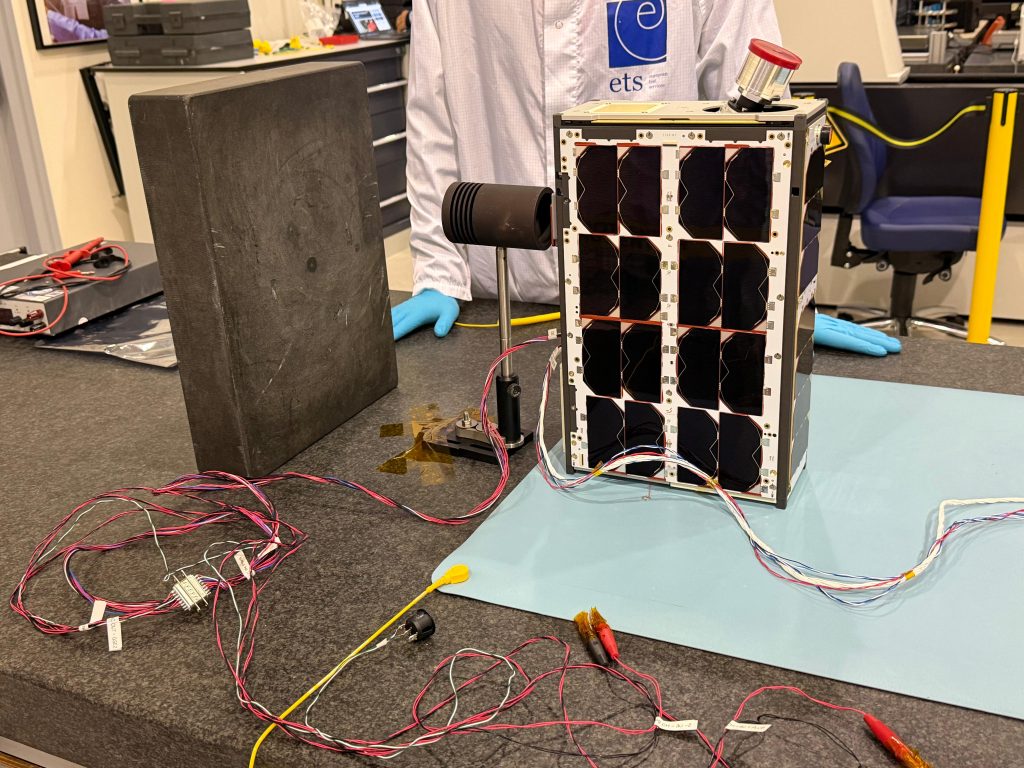 |
| Field | Previous | Suggested |
|---|---|---|
| Description | - | The Optisat mission is among Greece’s first CubeSat projects to demonstrate secure laser-based communications from orbit. In the Optisat mission context, the SCOT20 confirms TESAT's capability to provide high-performance, compact optical communication solutions for micro- and nanosatellites. Using laser light instead of radio frequency (RF) signals, the SCOT20 supports data rates up to 1 Gbps, providing enhanced security against interception or jamming. These capabilities are crucial for missions requiring high speed and secure data transmission. The SCOT20 follows major standards in optical communication such as SDA and ESTOL. The optical terminals will use laser light for high-bandwidth, secure links between the satellites and ground stations, potentially exceeding 1Gbps data rates. This technology represents a step change from traditional radio frequency communications, which are vulnerable to interference, provide much lower data rates, and require licensing. |
| Image |

|
|