Suggested Edit for Satellite
Suggested by kenchangh on: 2026-08-22 22:03
Citation: https://github.com/kenchangh/kensat#radio-link-for-receiving-stations
Verdict: Approved
Reviewed by fredy on: 2026-08-22 23:52
| Name | KENSAT |
| NORAD ID | 98372 |
| Followed NORAD ID | - |
| Alternative Names | - |
| Description | KENSAT is a 2U CubeSat — and the first satellite from a private Malaysian individual to reach orbit. At its core is a Jetson Orin Nano GPU running large language model inference directly on-orbit, making KENSAT one of the smallest platforms ever to perform live AI computation in space. Telemetry, sensor data, and model outputs are narrated by the onboard LLM and broadcast to the ground in near-real-time. The satellite transmits amateur beacon and telemetry over UHF at 437.080 MHz using GFSK modulation at up to 1200 bps. It serves purely educational and research purposes, with no commercial intent. Operated by a duly licensed amateur with no pecuniary interest, KENSAT fully complies with ITU RR 1.56 and 1.57. All telemetry formats, decoders, and software are open and publicly available, so amateur operators worldwide can receive, decode, and analyze its signals — including the raw outputs from the AI payload. The mission is intended to advance technical investigation and self-training within the amateur-satellite service, and to invite global collaboration on telemetry capture, on-orbit machine learning, and experimentation with new techniques at the edge of what a hobbyist-class spacecraft can do. KENSAT launches on SpaceX Transporter-18 from Vandenberg, targeting a 520 km sun-synchronous orbit. More at www.kensat.com. |
| Owner/Operator | - |
| Status |

|
| Reception Status | Unknown |
| Reception Evidence | - |
| Countries of Origin | |
| Website | https://kensat.com/ |
| Dashboard URL | - |
| Launch Date | - |
| Deploy Date | - |
| Image | 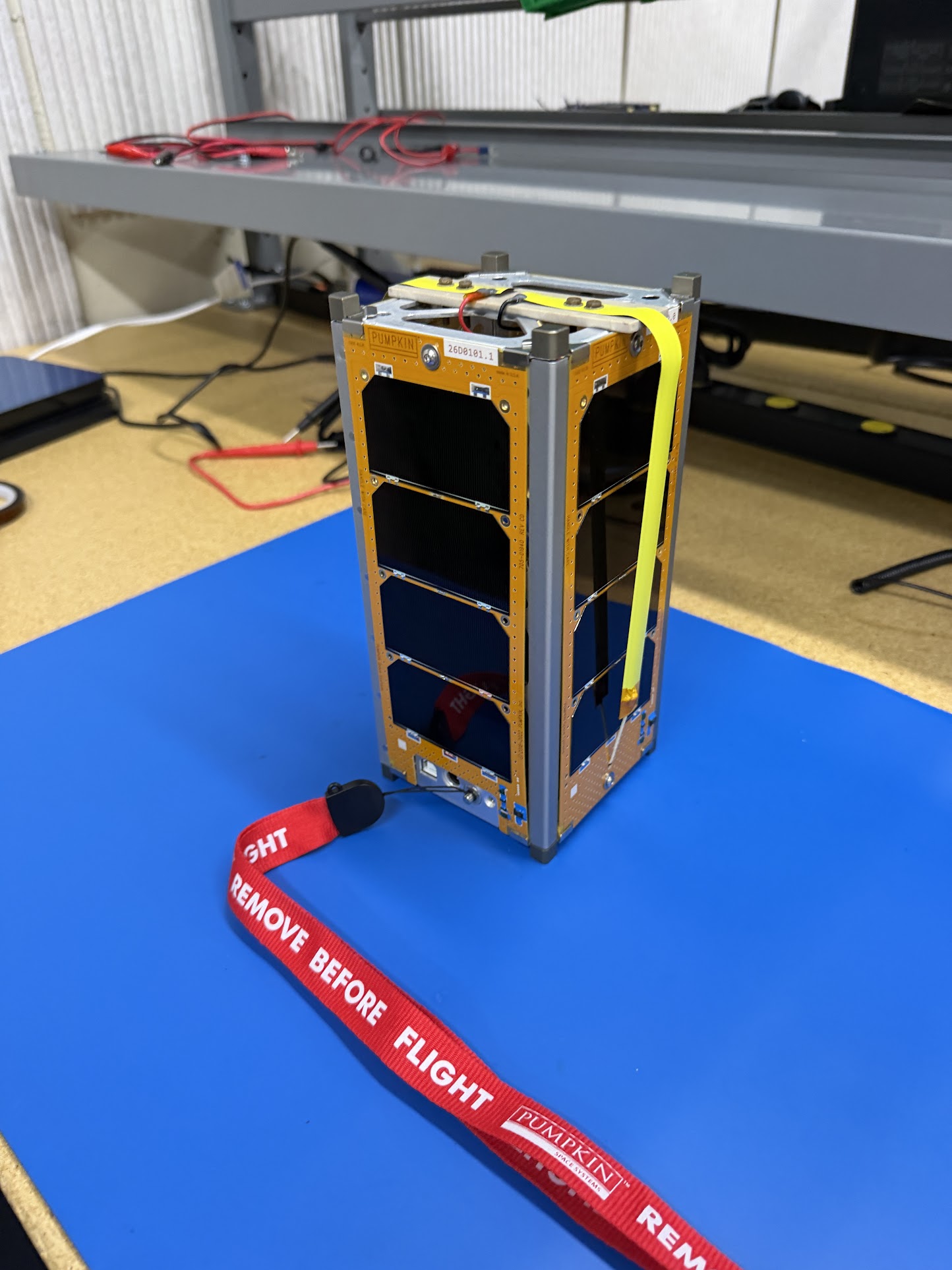 |
| Field | Previous | Suggested |
|---|---|---|
| Description | KENSAT is a 2U CubeSat — and the first satellite from a private Malaysian individual to reach orbit. At its core is a Jetson Orin Nano GPU running large language model inference directly on-orbit, making KENSAT one of the smallest platforms ever to perform live AI computation in space. Telemetry, sensor data, and model outputs are narrated by the onboard LLM and broadcast to the ground in near-real-time. The satellite transmits amateur beacon and telemetry over UHF at 437.080 MHz using GFSK modulation at up to 9600 bps. It serves purely educational and research purposes, with no commercial intent. Operated by a duly licensed amateur with no pecuniary interest, KENSAT fully complies with ITU RR 1.56 and 1.57. All telemetry formats, decoders, and software are open and publicly available, so amateur operators worldwide can receive, decode, and analyze its signals — including the raw outputs from the AI payload. The mission is intended to advance technical investigation and self-training within the amateur-satellite service, and to invite global collaboration on telemetry capture, on-orbit machine learning, and experimentation with new techniques at the edge of what a hobbyist-class spacecraft can do. KENSAT launches on SpaceX Transporter-18 from Vandenberg in June 2026, targeting a 520 km sun-synchronous orbit. More at www.kensat.com. | KENSAT is a 2U CubeSat — and the first satellite from a private Malaysian individual to reach orbit. At its core is a Jetson Orin Nano GPU running large language model inference directly on-orbit, making KENSAT one of the smallest platforms ever to perform live AI computation in space. Telemetry, sensor data, and model outputs are narrated by the onboard LLM and broadcast to the ground in near-real-time. The satellite transmits amateur beacon and telemetry over UHF at 437.080 MHz using GFSK modulation at up to 1200 bps. It serves purely educational and research purposes, with no commercial intent. Operated by a duly licensed amateur with no pecuniary interest, KENSAT fully complies with ITU RR 1.56 and 1.57. All telemetry formats, decoders, and software are open and publicly available, so amateur operators worldwide can receive, decode, and analyze its signals — including the raw outputs from the AI payload. The mission is intended to advance technical investigation and self-training within the amateur-satellite service, and to invite global collaboration on telemetry capture, on-orbit machine learning, and experimentation with new techniques at the edge of what a hobbyist-class spacecraft can do. KENSAT launches on SpaceX Transporter-18 from Vandenberg, targeting a 520 km sun-synchronous orbit. More at www.kensat.com. |
| Image |

|
|