- Name
- SINP-MSU-80 (Scorpion)
- Alternate Names
- НИИЯФ-МГУ-80 (Скорпион), RS89S
- Satellite ID
- OTDY-2434-1908-3059-5807
- Temporary NORAD ID
- 98427
- Followed NORAD ID
- 67293
- Website
- https://spacepi.space/satellites/skorpion/
- Country of Origin
-
Russia

Satellite is in orbit and operational
Satellite is reported to be transmitting at an uncoordinated or denied frequency. Details
- Launch Date
- 2025-12-28T13:18:00+00:00
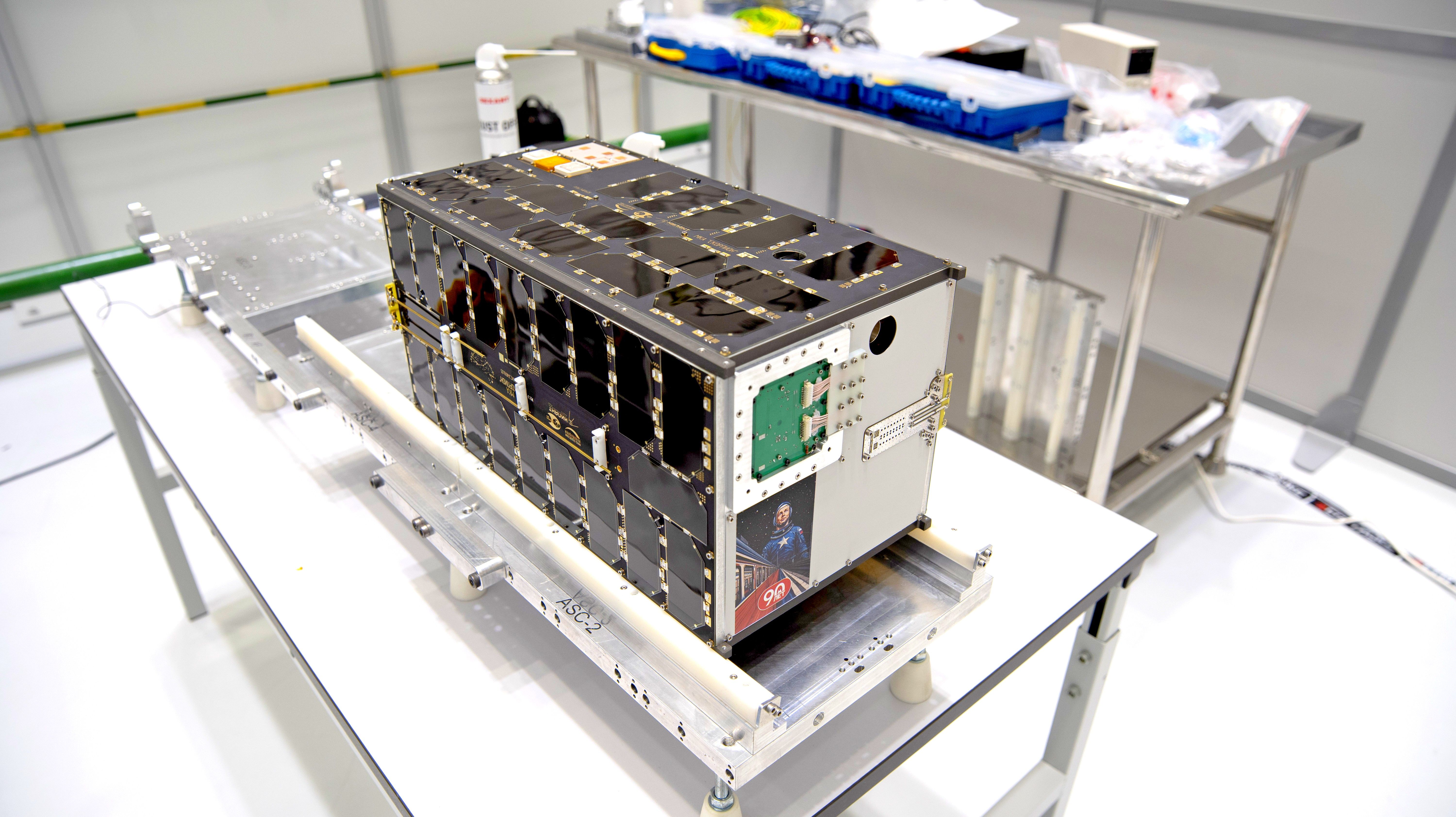
The small spacecraft "SINP-MSU-80 (Scorpion)" of the Lomonosov Moscow State University Skobeltsyn Institute of Nuclear Physics was developed jointly with NILAKT DOSAAF based on the CubeSat standard in a 16U form factor. February 1, 2026, marks the 80th anniversary (http://sinp.msu.ru/ru/page/26408) of the founding of the Skobeltsyn Institute of Nuclear Physics. The satellite was named in honor of this event.
The primary mission of the SINP-MSU-80 spacecraft is to obtain radiation data in polar sun-synchronous orbits using cosmic radiation detectors developed at SINP MSU in a limited-orientation flight on a small CubeSat platform with a specified onboard electronics configuration. The combined operation of the fast optical telescope, gamma-ray and charged-particle detectors is aimed at a comprehensive study of cosmophysical and astrophysical phenomena, as well as high-altitude atmospheric discharges. Another important objective is to conduct astrobiology research, specifically studying the impact of space factors on biological systems and developing methods for searching for microorganisms on space objects.
Coordinated observations of charged particle and gamma-ray fluxes will allow us to study the mechanisms of magnetospheric dynamics and create a prototype system for assessing space weather conditions. The experimental equipment located on board is an important stage in the development of satellite experiment technologies at the Lomonosov Moscow State University Skobeltsyn Institute of Nuclear Physics, the main objective of which is to develop a dynamic model of the near-Earth radiation environment in various orbits.
- Type
- Transmitter
- Downlink Mode
- DOKA
- Downlink Frequency
- 435240000
- Baud
- 9600
- IARU Coordination
- IARU Uncoordinated
- Type
- Transmitter
- Downlink Mode
- AFSK
- Downlink Frequency
- 435240000
- Baud
- 1200
- IARU Coordination
- IARU Uncoordinated
- Type
- Transmitter
- Downlink Mode
- AFSK
- Downlink Frequency
- 435340000
- Baud
- 1200
- IARU Coordination
- IARU Uncoordinated
- Type
- Transmitter
- Downlink Mode
- DOKA
- Downlink Frequency
- 435340000
- Baud
- 9600
- IARU Coordination
- IARU Uncoordinated
- Type
- Transmitter
- Downlink Mode
- BPSK
- Downlink Frequency
- 2401000000
- IARU Coordination
- IARU Uncoordinated
No observations recorded for SINP-MSU-80 (Scorpion) in the last 24h
- TLE Source
- Space-Track.org
- TLE Updated
- 2026-06-16 09:30:04 UTC
- TLE Set
-
1 67293U 25313AX  26167.16265130  .00003524  00000-0  15355-3 0  9993
2 67293  97.3941 241.9397 0010788   0.5111 359.6135 15.22804124 25805